

GLOBAL TOPICS – Inside Africa
Press Release
New think: act STUDY "GLOBAL TOPICS – Inside Africa" by Roland Berger explores business opportunities in Africa
"We must get rid of old misconceptions and seize the opportunities offered by Africa today," says Christian Wessels, author of the study and Roland Berger Partner in charge of Sub-Saharan Africa. "Many economies in Africa are today where the BRIC countries were 20 years ago. This also becomes clear when you look at the growth rates of recent years." Angola's economy, for instance, grew by more than 11% over the past ten years, Nigeria enjoyed just under 9% growth and Ethiopia about 8.5%. The forecasts for 2016 suggest further growth for the region.
Africa has recovered much faster from the financial crisis than many Western countries. Between 2011 and 2016, Sub-Saharan Africa alone will see 5.4% growth – while the world economy will lag behind at 2.9%. Between 2001 and 2010, the top 10 fastest growing economies of the world included 6 African countries. In the next five years, current forecasts put this figure at 7.
Development in leaps and bounds
"Africa's development is impressive," says Africa expert Wessels. "The number of mobile phones, for instance, has exceeded the number of adults in many African countries." This is due to an effect that the experts refer to as "technological leapfrogging": Africa is adopting the most modern, most effective and also greenest versions of new technologies. It "leapfrogs" earlier stages of development, such as the costly buildup of landlines in telecommunications. Other industries are also taking off: Roland Berger has identified energy and financial services as the most important sectors. But they also see major growth potential in retail, transportation, manufacturing and the public sector.
"Africa has more than a billion potential consumers, a growing and increasingly wealthy middle class and young, motivated and skilled workers," says Wessels. The middle class already accounts for a third of the population, which puts it on a par with India. Per capita income will grow 50% by 2024. Almost all sectors require substantial investments, especially energy, infrastructure and financial services.
Rising energy requirements and innovative solutions
Africans today use only about one tenth of the energy that Europeans use on average. Many have no access at all to electricity. But a secure supply of energy is a basic requirement for economic growth. "A lot still needs to be done," says Rajan Chandra, co-author of the study. "But we are optimistic: In Southeast Asia, 500 million people were given access to electricity within twenty years. Similar results are possible in Africa. The energy sector therefore has massive growth potential." New government structures and a better business framework in many countries attract investments. Nigeria, for instance, is currently abandoning its energy monopoly, and is therefore privatizing energy companies. This allows Western companies to partner with local businesses.
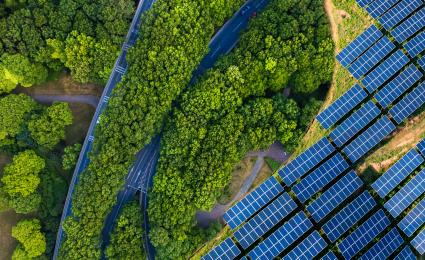
Just as telecommunications before, the energy sector is experiencing technological leapfrogging, which helps boost growth: Kenya and South Africa, for example, are increasingly focusing on renewable energies, and Kenya is building the largest wind park in Africa. Renewable energies offer a host of opportunities for the continent. They allow energy to be generated much more cheaply than with coal- or oil-fired power stations. Technological progress kicks off a growth spurt of its own, and access to energy becomes easier. When people need electricity, they can quickly install a photovoltaic system on their rooftop. They don't need to wait for years before power lines come to their village. The required financing is offered by providers that specialize, for instance, in renewable energies combined with micro-credits. Finding the finance for energy systems used to be the biggest obstacle. This is where new business models come in. "This trend shows that new ideas have a chance to become widespread in the market," says Chandra.
In addition to the opportunities offered by renewable energies, Africa has large oil and gas deposits. For decades, Angola, Algeria, Libya and Nigeria have been among the largest oil and gas producers. New fields have been discovered in Ghana, Uganda and Equatorial Guinea.
The financial sector drives growth
About 80% of Africans have so far had no access to financial services. Almost two thirds of the population have to travel more than 30 kilometers to reach the nearest bank. "Africa has a market potential of about USD 60 billion in annual deposits for banks that move first to use their experience and resources to offer simple financial products on favorable terms," says Benedikt Wahler, Project Manager at Roland Berger. If the majority of the population is integrated in the economy via banking products, large and small companies will be able to solve their financing bottlenecks.
"Some banks in Africa have already pioneered the mass-market business, and are reaping handsome profits in the process. This is in stark contrast to most African and international banks that use traditional approaches in their retail business," says Wahler. The most important factors for success in the banking sector include more professional key account business, a focus on small and medium-sized enterprises and successful mass-market strategies. The study authors expect the banking sector to grow by 15% annually. That means sales of USD 390 billion by 2020.
Earn money and do good
"Even twenty years back, only few people would have thought that Brazil, China and India would become investor hotspots. Many doubted that the BRIC countries would be able to shed political and economic instability, violence and poverty. Today, BRIC is booming and investors cannot ignore these countries. It's time we looked at Africa in the same light," says Christian Wessels. "Companies that invest in Africa can seize great business opportunities – and help change a whole continent for the better."The study has been published as part of our GLOBAL TOPICS initiative:
2012 is a year of dramatic economic and social challenges – and one of political change, with transitions of power taking place in 60 countries affecting 50 per cent of the world's GDP. With our initiative GLOBAL TOPICS, we assess the most pressing issues and outline possible solutions to leaders. Leveraging the global footprint of our firm, we focus on how debt, welfare issues, energy supply and changes in demographics affect perspectives for the world. We also explore how Africa as an entire continent turns these challenges into opportunities.
New think: act STUDY "GLOBAL TOPICS – Inside Africa" by Roland Berger explores business opportunities in Africa
- Africa is the world's most dynamic growth region of the future
- In terms of economic potential, Africa is similar to the BRIC countries 20 years ago
- Energy and financial services are the most important growth drivers
- One billion potential consumers and a broad-based middle class offer companies a host of opportunities
"We must get rid of old misconceptions and seize the opportunities offered by Africa today," says Christian Wessels, author of the study and Roland Berger Partner in charge of Sub-Saharan Africa. "Many economies in Africa are today where the BRIC countries were 20 years ago. This also becomes clear when you look at the growth rates of recent years." Angola's economy, for instance, grew by more than 11% over the past ten years, Nigeria enjoyed just under 9% growth and Ethiopia about 8.5%. The forecasts for 2016 suggest further growth for the region.
Africa has recovered much faster from the financial crisis than many Western countries. Between 2011 and 2016, Sub-Saharan Africa alone will see 5.4% growth – while the world economy will lag behind at 2.9%. Between 2001 and 2010, the top 10 fastest growing economies of the world included 6 African countries. In the next five years, current forecasts put this figure at 7.
Development in leaps and bounds
"Africa's development is impressive," says Africa expert Wessels. "The number of mobile phones, for instance, has exceeded the number of adults in many African countries." This is due to an effect that the experts refer to as "technological leapfrogging": Africa is adopting the most modern, most effective and also greenest versions of new technologies. It "leapfrogs" earlier stages of development, such as the costly buildup of landlines in telecommunications. Other industries are also taking off: Roland Berger has identified energy and financial services as the most important sectors. But they also see major growth potential in retail, transportation, manufacturing and the public sector.
"Africa has more than a billion potential consumers, a growing and increasingly wealthy middle class and young, motivated and skilled workers," says Wessels. The middle class already accounts for a third of the population, which puts it on a par with India. Per capita income will grow 50% by 2024. Almost all sectors require substantial investments, especially energy, infrastructure and financial services.
Rising energy requirements and innovative solutions
Africans today use only about one tenth of the energy that Europeans use on average. Many have no access at all to electricity. But a secure supply of energy is a basic requirement for economic growth. "A lot still needs to be done," says Rajan Chandra, co-author of the study. "But we are optimistic: In Southeast Asia, 500 million people were given access to electricity within twenty years. Similar results are possible in Africa. The energy sector therefore has massive growth potential." New government structures and a better business framework in many countries attract investments. Nigeria, for instance, is currently abandoning its energy monopoly, and is therefore privatizing energy companies. This allows Western companies to partner with local businesses.
Just as telecommunications before, the energy sector is experiencing technological leapfrogging, which helps boost growth: Kenya and South Africa, for example, are increasingly focusing on renewable energies, and Kenya is building the largest wind park in Africa. Renewable energies offer a host of opportunities for the continent. They allow energy to be generated much more cheaply than with coal- or oil-fired power stations. Technological progress kicks off a growth spurt of its own, and access to energy becomes easier. When people need electricity, they can quickly install a photovoltaic system on their rooftop. They don't need to wait for years before power lines come to their village. The required financing is offered by providers that specialize, for instance, in renewable energies combined with micro-credits. Finding the finance for energy systems used to be the biggest obstacle. This is where new business models come in. "This trend shows that new ideas have a chance to become widespread in the market," says Chandra.
In addition to the opportunities offered by renewable energies, Africa has large oil and gas deposits. For decades, Angola, Algeria, Libya and Nigeria have been among the largest oil and gas producers. New fields have been discovered in Ghana, Uganda and Equatorial Guinea.
The financial sector drives growth
About 80% of Africans have so far had no access to financial services. Almost two thirds of the population have to travel more than 30 kilometers to reach the nearest bank. "Africa has a market potential of about USD 60 billion in annual deposits for banks that move first to use their experience and resources to offer simple financial products on favorable terms," says Benedikt Wahler, Project Manager at Roland Berger. If the majority of the population is integrated in the economy via banking products, large and small companies will be able to solve their financing bottlenecks.
"Some banks in Africa have already pioneered the mass-market business, and are reaping handsome profits in the process. This is in stark contrast to most African and international banks that use traditional approaches in their retail business," says Wahler. The most important factors for success in the banking sector include more professional key account business, a focus on small and medium-sized enterprises and successful mass-market strategies. The study authors expect the banking sector to grow by 15% annually. That means sales of USD 390 billion by 2020.
Earn money and do good
"Even twenty years back, only few people would have thought that Brazil, China and India would become investor hotspots. Many doubted that the BRIC countries would be able to shed political and economic instability, violence and poverty. Today, BRIC is booming and investors cannot ignore these countries. It's time we looked at Africa in the same light," says Christian Wessels. "Companies that invest in Africa can seize great business opportunities – and help change a whole continent for the better."The study has been published as part of our GLOBAL TOPICS initiative:
2012 is a year of dramatic economic and social challenges – and one of political change, with transitions of power taking place in 60 countries affecting 50 per cent of the world's GDP. With our initiative GLOBAL TOPICS, we assess the most pressing issues and outline possible solutions to leaders. Leveraging the global footprint of our firm, we focus on how debt, welfare issues, energy supply and changes in demographics affect perspectives for the world. We also explore how Africa as an entire continent turns these challenges into opportunities.
Download the study free of charge at:
www.rolandberger.com/pressreleases
Subscribe to our free newsletter at:
www.rolandberger.com/press-newsletter
For further information, please contact:
Matthias Hopfmüller
Roland Berger Strategy Consultants
Tel.: +49 89 9230-8190![]()